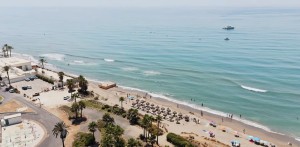
On September 18, Marbella’s council voted through the city’s new General Urban Development Plan. It’s called the PGOM, short for Plan General de Ordenación Municipal. This is the first real update to Marbella’s planning framework in decades, and it changes the picture for a lot of property in the city.
Why this matters
Marbella has been operating under a planning framework from 1986 for a long time. That’s nearly forty years old. A lot has changed in Marbella since then, but the rules on paper hadn’t kept up. This left thousands of properties in a kind of legal limbo, and it made planning decisions harder for everyone involved: the town hall, developers, and owners alike.
The new PGOM is meant to fix that. It gives Marbella a modern legal foundation to work from, one that matches how the city has actually grown.
The headline number: more land
Under the old 1986 plan, Marbella had around 40 million square metres classified as urban land. The new PGOM raises that to 53 million square metres. That’s an increase of roughly 13 million square metres.
This new land isn’t just empty space on a map. The plan sets it aside for a mix of uses: new housing, public infrastructure, facilities, green areas, and space for economic activity. It’s a broad framework, built to support the city over the long term rather than just the next few years.

Clearing up years of legal uncertainty
Here’s the part that will matter most to a lot of homeowners. Around 18,000 homes in Marbella fell outside urban regularity under the old plan. In plain terms, that means their legal status was unclear. They existed, people lived in them, but the planning framework hadn’t properly accounted for them.
This has been a real headache for owners over the years. It can complicate things like getting a mortgage, applying for renovation permits, or selling with full confidence. The new PGOM gives many of these properties a clearer legal footing for the first time. That’s a meaningful shift, not just paperwork.
Room to grow
Of the 13 million square metres of newly classified urban land, about 3 million square metres remain undeveloped. That’s a significant amount of room for new homes, businesses, and infrastructure in the years ahead.
It’s worth noting that classifying land as urban is only the first step. It doesn’t automatically mean bulldozers show up next month. Developers still need to submit detailed planning documents before specific projects can move forward. But it does mean the door is now open in a way it wasn’t before.
What this means if you own property in Marbella
If your property was in one of the legal grey areas, this is good news. A clearer legal framework tends to bring more certainty around resale value, financing options, and renovation permits down the line. It’s worth checking with a local advisor whether your property falls under the newly regularised zones.

What this means if you’re buying
If you’re looking at land or a new development in Marbella, it’s worth checking exactly where a plot sits under the new classification before committing to anything. The PGOM sets the overall direction, but a second document, called the POU, will settle the finer details plot by plot: things like building height, density, and permitted uses. Ask your agent or advisor to check both.
The bigger picture
This is one of the biggest shifts in Marbella’s planning story in a generation. It won’t change things overnight, but it sets the direction for how the city grows, and how confidently people can buy, sell, and build here, for years to come.